Once Upon a Tiangge

Creating a cultural heritage game experience using a board, a set of cards and AR technology.
Overview
There is a vital need for fresh stories beyond American and European cultures to promote representation, identity, and understanding through diverse voices in Southeast Asia. Educating and encouraging audiences to authentic narratives and portrayals from various global backgrounds can open perspectives and enrich human experiences.
Over the course of two months, I developed a game called, Once Upon a Tiangge (pronounced “chang-geh”), and the title translates to "Once Upon a Store". The project is a mobile game enhanced with augmented reality, using a physical board and a deck of cards to create an immersive experience.
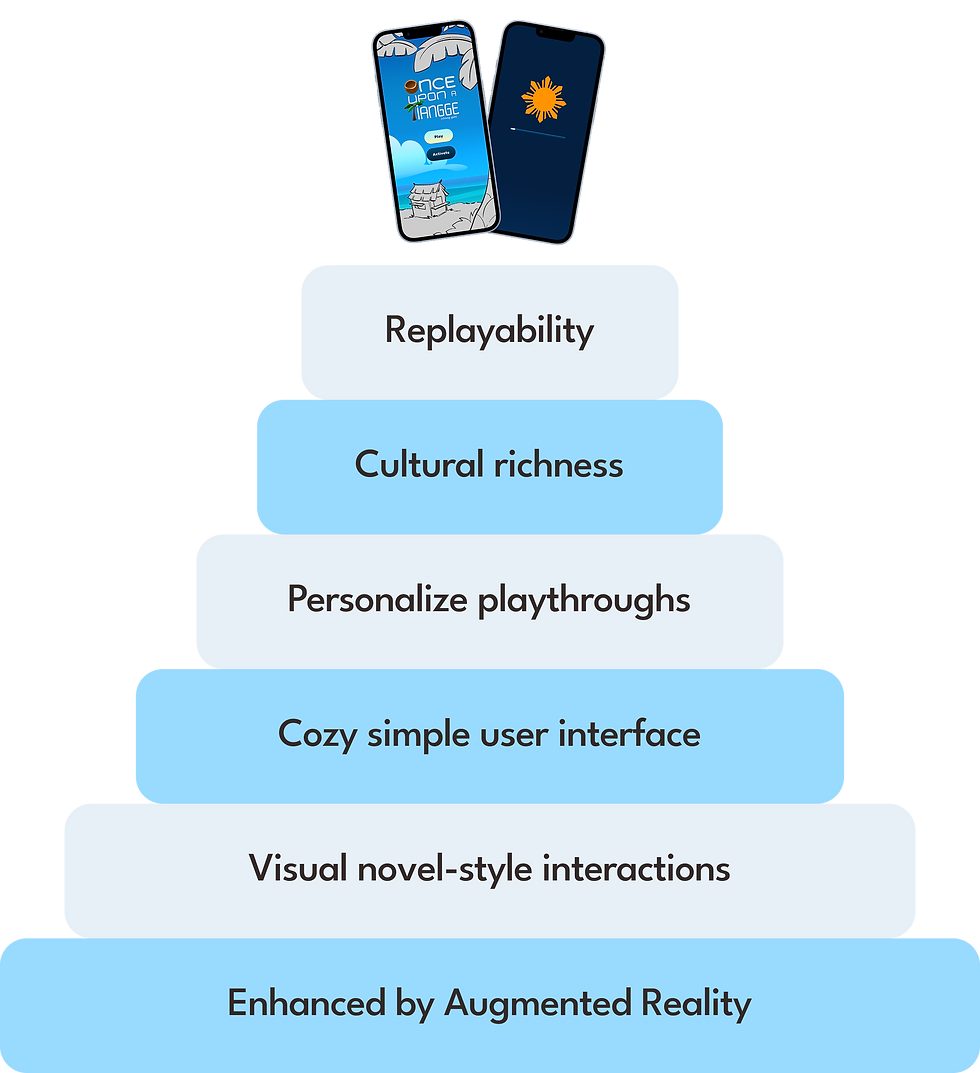
The game emphasizes replayability, layered storytelling, visual novel-inspired gameplay, and meaningful character interactions, all built in a Filipino foundation. Through extensive market research of existing games, user interviews, and field studies in the Philippines, the game was formed with a vision to celebrate and share Filipino culture to a wider audience.

Time
10 Weeks
Tools
Figma, Figjam, Procreate, craft materials
Role
UX Designer, Illustrator
Tasks
Competitor Analysis, Affinity Map, User Interviews, Autoethnography, Field Study, Wireframe and Prototype, Concept Art, Illustration
Discover
The research revealed a lack of games that aim to preserve and promote cultural heritage. Data also identified a specific audience who look for affordable, replayable games that provide an accessible introduction to Filipino mythology. Whether the players reside in the West or in smaller hometowns across the Philippines, this game was designed to resonate with a global audience.

Competitor Analysis
A competitor analysis and a heuristic evaluation were conducted during the market research, reinforced by three rounds of user interviews and surveys, an additional field study, and observational research.
Opportunities centred around creating an affordable and flexible game that would feel familiar to gaming audiences while remaining true to the culture. I also explored other design solutions influenced by market trends to understand what makes a game replayable and engaging, and have long-term player retention.


The collected data underwent qualitative coding and affinity mapping to identify key insights and recurring themes.
User Interviews & Surveys
To understand the primary and secondary target audience, I interviewed players interested in cozy games and surveyed VR gamers. I also interviewed members of the Filipino community to enhance cultural authenticity and representation for the project.

Field Study & Autoethnography
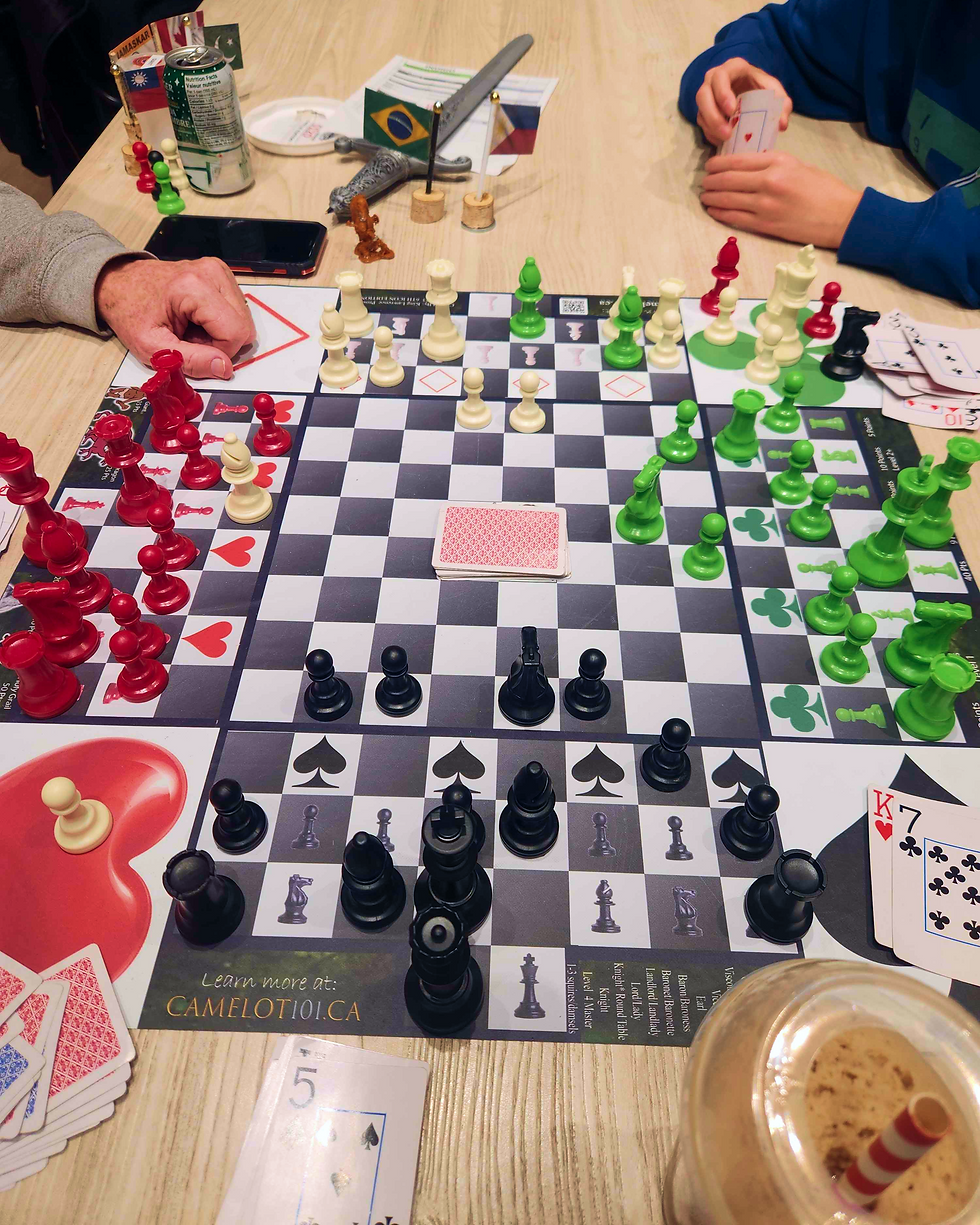
I explored existing VR and AR experiences ranging from mobile games to interactive art installations. I also observed a creator-led game that incorporated a physical board, chess pieces, and playing cards.
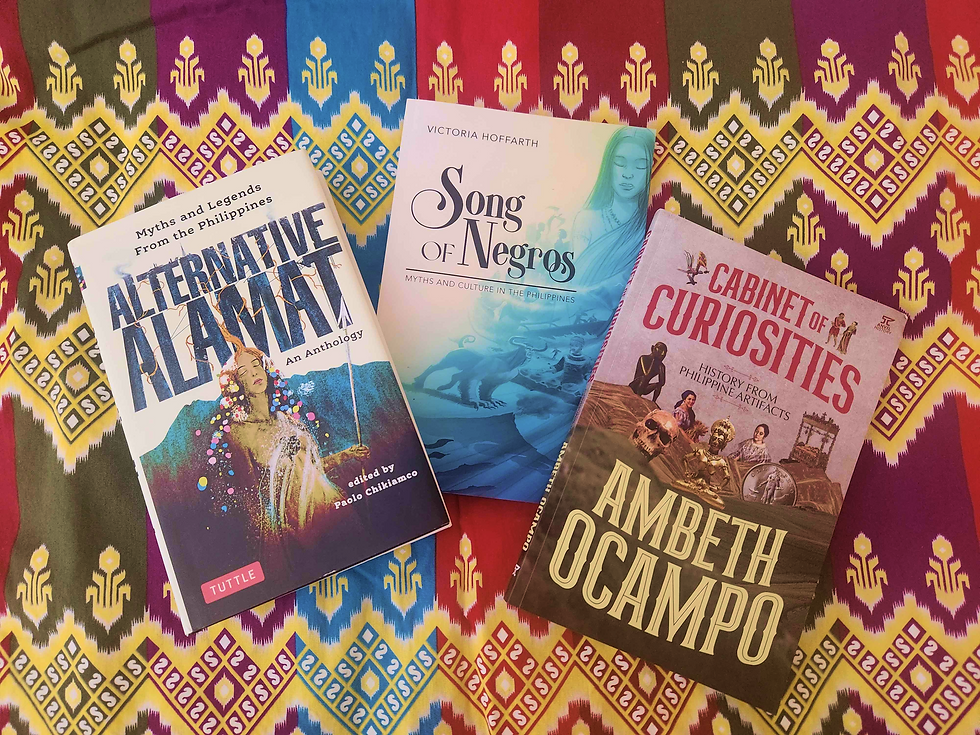
During the research, I purchased published Filipino folktales and anthologies from a local store in the Philippines. Field notes and photos from my trip were also used as additional research material.


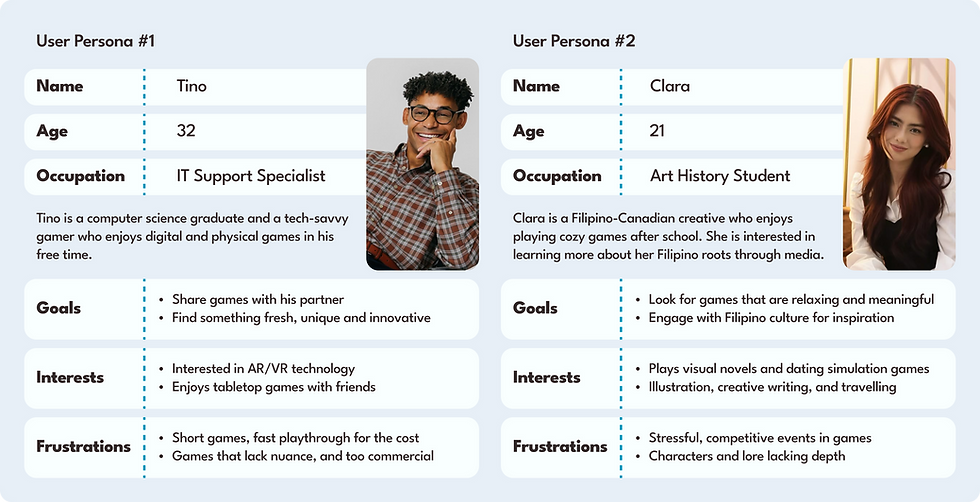
The user persons I made are people interested in collecting unique games, and those within the Filipino diaspora looking for experiences that resonate with them.
Design
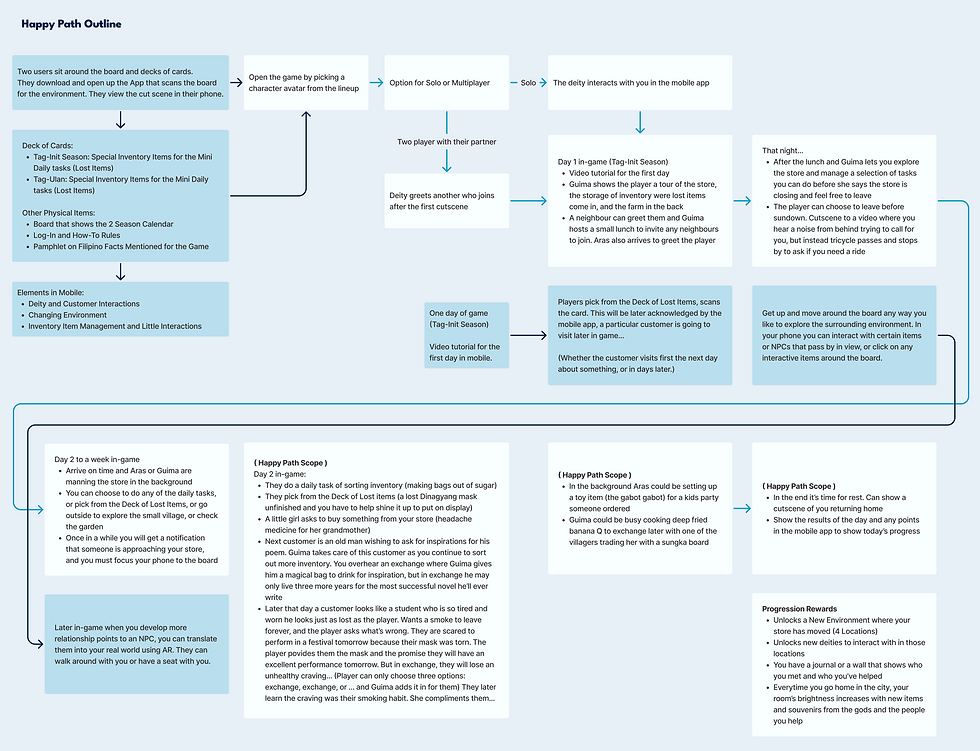
Shaped from field studies and design research, the game’s narrative was conceptualized through illustrated environments, and the Happy Path Outline was written to follow the player in a single in-game day. In that Outline, I showed key focuses of the project: the layered narratives, and the simple gameplay mechanics such as the sign-up, registration, and save progression. All the while making sure, they are designed for the immersion and player engagement.
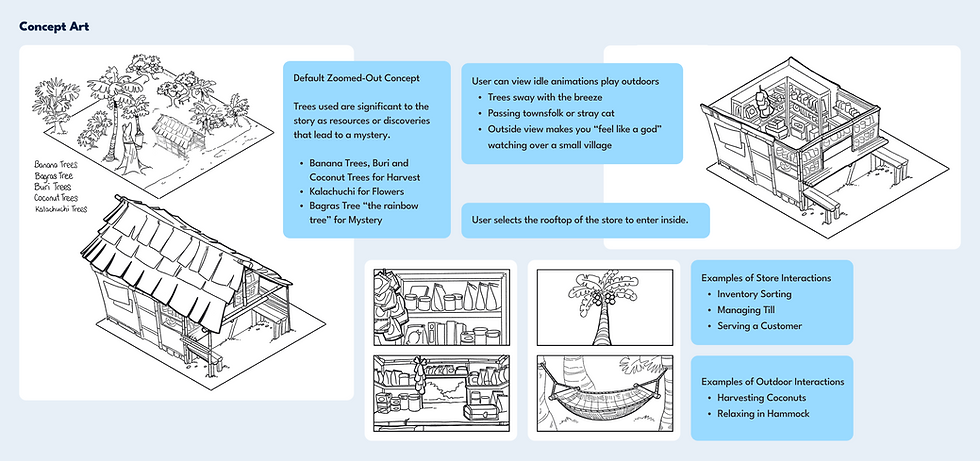
Player progression and discovery emerged as an important theme during the gamer interviews, and that led me to drawing out early floor plans for what the player can unlock as they play further, and the visualization of the game's interactive world, outside the store and inside the store.

In-game progression and discoveries were drafted through floor plan concepts. I also conceptualized the 3D Assets, planning out interactions and player engagement.
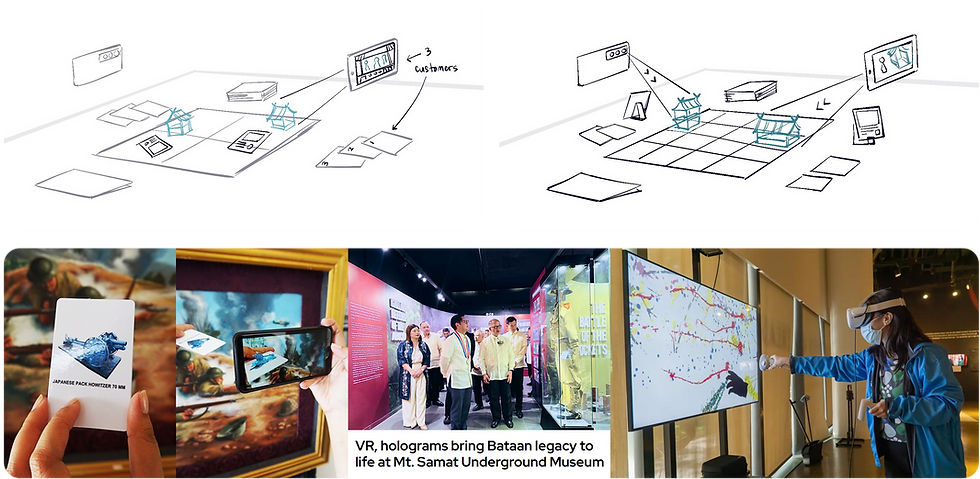
Marker-based AR technology was selected for the game due to its familiarity within the VR/AR space in the Philippines. In my research, I found they were mostly used in museums and heritage sites.
Wireframes
The low fidelity prototype screens were viewed in a workshop. The user feedback I received emphasized the importance of showing quest-based gameplay and prioritizing customer interactions over task-focused mini games.
Due to time constraints, the mid-fidelity prototype was refined into a shorter user flow that included the Sign-Up and Quick Tutorials. To exhibit the marker-based AR integration, crafted placeholders were used to represent the 3D models projected onto the game board.


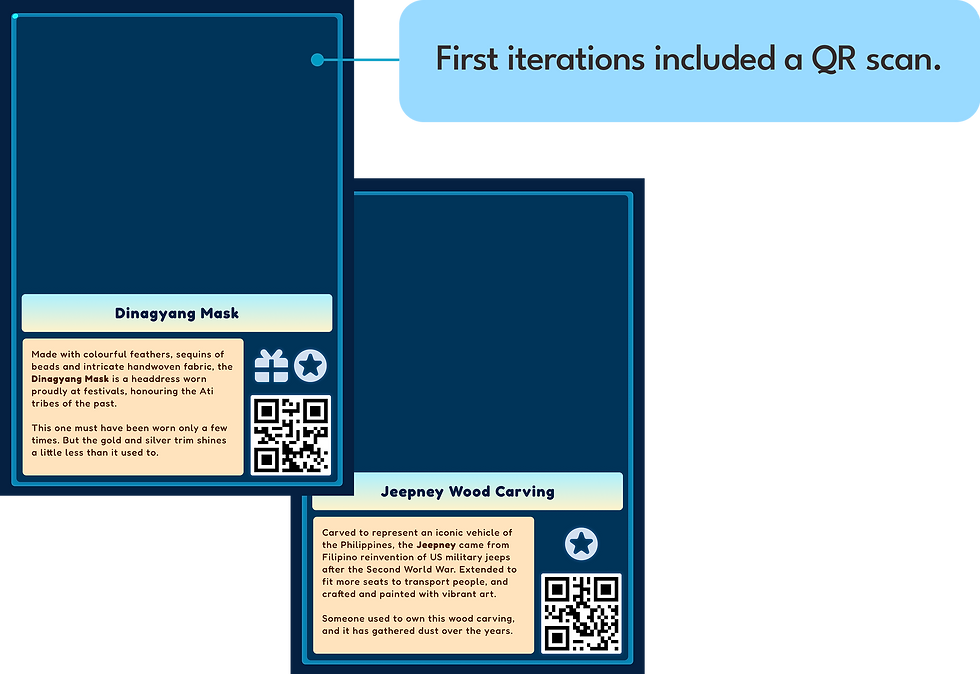
Two gameplay mechanics were streamlined or temporarily omitted within the project scope: the coconut harvest mini game was simplified, and the card interaction system was displayed conceptually, but its full implementation in-game has yet to be prototyped.

Results
The first iteration of the mid-fidelity prototype was tested by two user groups: experienced gamers and newcomers.
The gamer participants primarily suggested a minor improvement, recommending the inventory space to be displayed on-screen for usability.
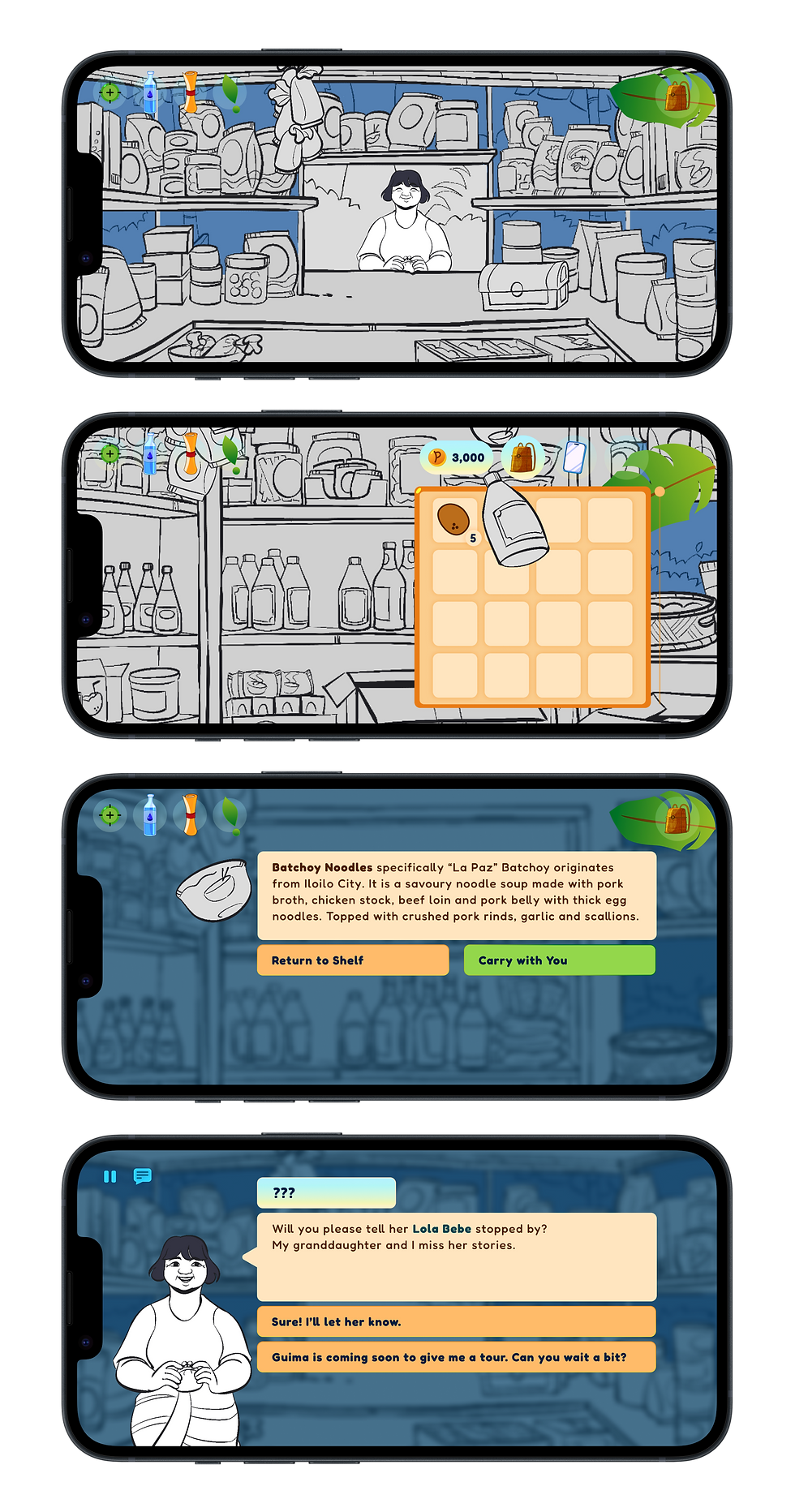
Meanwhile, participants unfamiliar with certain choice menus for visual novel-style games, found the dialogue options unclear. In the first iteration, the choices were aligned at the top and character speech at the bottom. This became a high priority modification from the user testing I needed to address, so I created multiple iterations. Ensuring a clear flow between character speech, dialogue choices, and item descriptions was crucial for a narrative-driven game.


Mid-fidelity Design
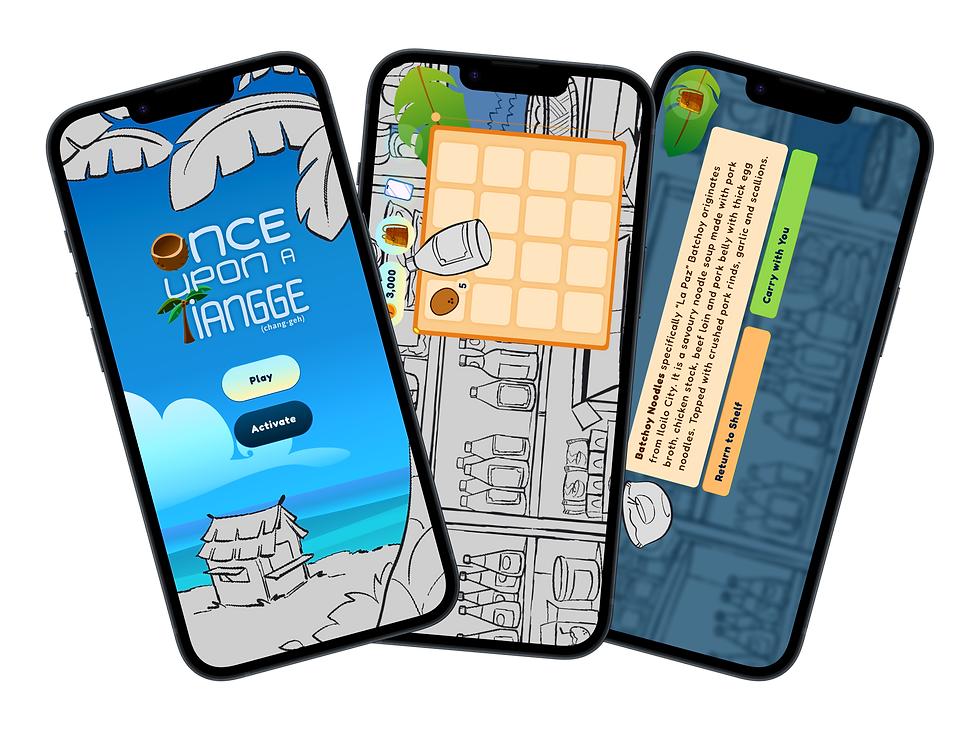
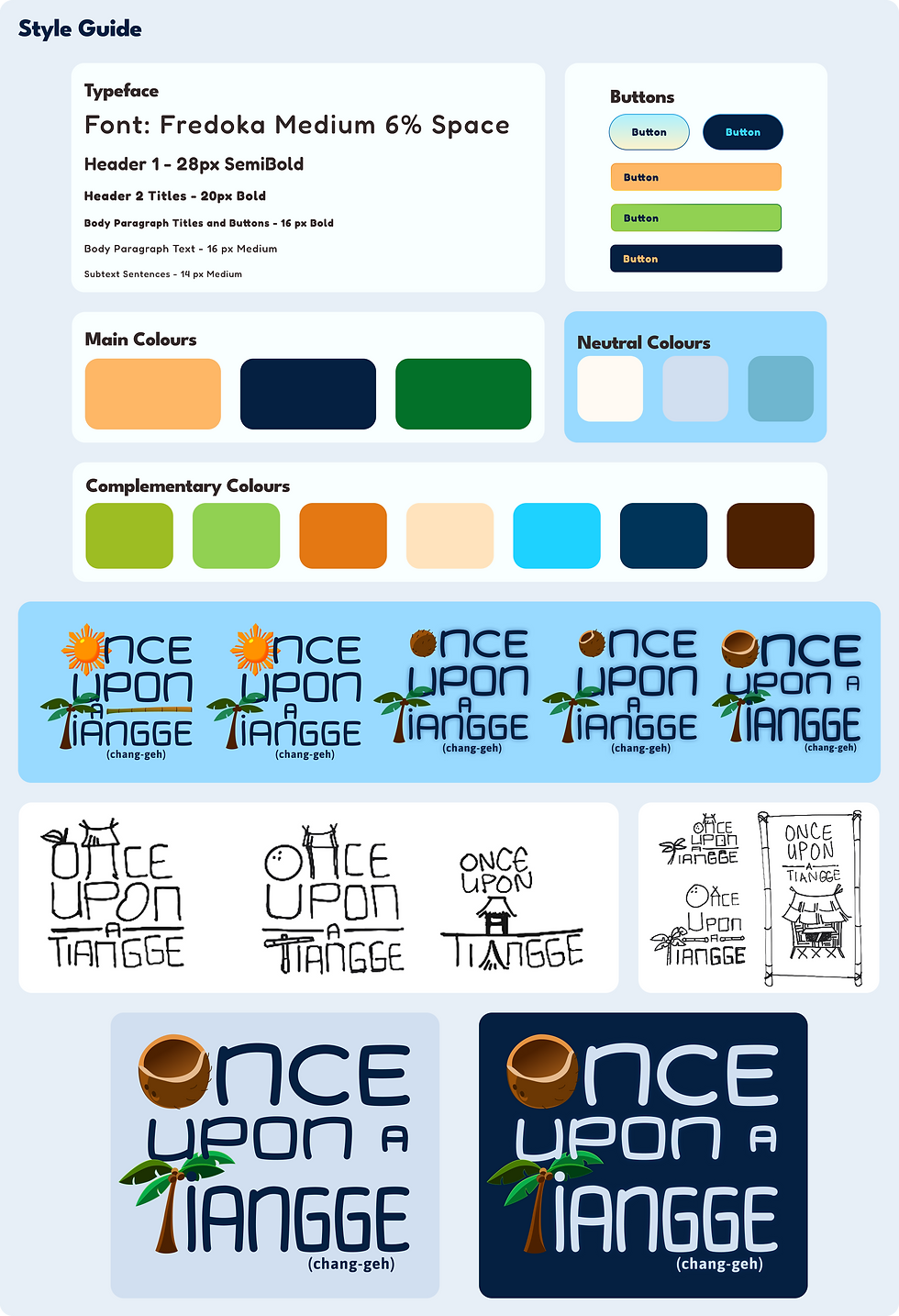
The second iteration of the mid-fidelity prototype showcased the branding, the logo, and a revised choice menu for character dialogue to boost clarity for all users.
There were adjustments made to the primary and secondary button colours to enhance visual distinction. In-store exploration was updated with a new cursor, where the user can look around using a swipe movement.
Following another user testing of this iteration, gamer participants preferred the first cursor design that was closer to the traditional game controller. As a result moving forward, the in-store exploration will undergo refinements in the next iteration.
User testing will remain an ongoing process beyond the next mid-fidelity update, as several features of the game are still in development. These features include the card interactions, and expanding the mini games to their intended design, which were previously simplified because of the time constraint.

Impact
93%
Feature Engagement Metrics
Positive user sentiment praising the visual style, comfort, accessibility, and learning features, such as the pronunciation and brief definitions of meanings.
86%
Learning Impact
Users reported gaining new insights into Filipino culture and introduced them to new ways of living.
90%
Cultural Retention
Users expressed interest in exploring more Filipino mythology and related media.

Overall, this project really taught me the importance of balancing creative ambition with technical and time constraints, while keeping design decisions rooted in user feedback and iterative testing.
Learnings
Defining and narrowing the project scope within the given timeline was one of my challenges in designing an ambitious game. The game has multiple facets from 3D animated interactions, to visual novel storytelling with multiple characters, and I made it a large endeavour for myself in the limited time, on top of conducting market research and usability testing.
In the future iterations, my next steps will be refining core interactions and features, especially the in-store cursor to be more of the traditional game console design. Moving forward, the next stage is a higher fidelity prototype that includes fully modelled 3D assets for AR implementation, more character interactions, complete art and background settings, and more UI refinements.